This post is one in progress. Examples are still being collected.
Recall the formal definition of Legendre transformation (taken from p. 19 of Geo. Method):
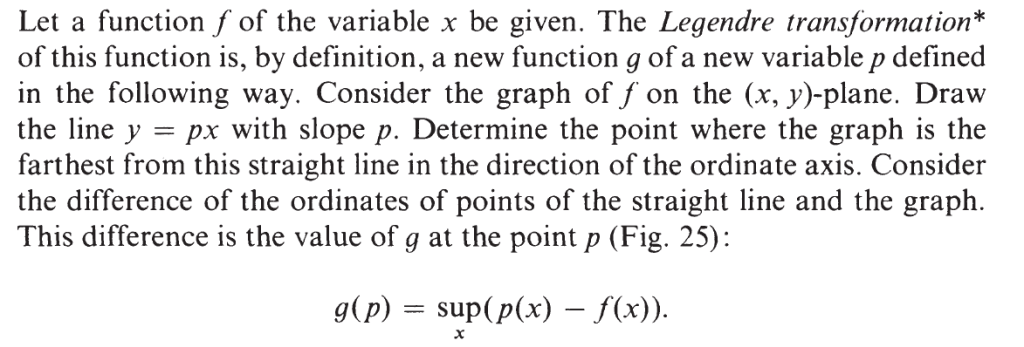
Geometrically, this is associating each point on the graph of f with the tangent line at that point. We will then have a family of tangent lines. The Legendre transformation takes this family of tangent lines into the dual space of the plane of lines; in that space, this family of tangent lines becomes a curve.
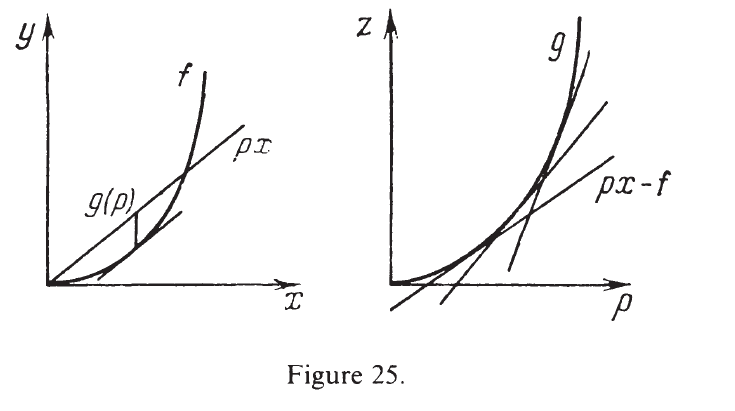
More details here: https://menagerieofmathematics.wordpress.com/2025/01/25/the-geometry-of-the-legendre-transformation-sidetrack-into-projective-duality/
Admittedly, the Legendre transformation is only well-defined for strictly convex functions.
But, what if we just consider (for any differentiable function) its set of tangent lines and the corresponding dual curve? Or, what if we even consider curves in general?
What will these dual curves look like?
These curves are not too difficult to find.
Given a function 


The corresponding point to this line in the dual plane would be 
Hence, the dual curve in the dual space can be parameterized by:

So, let’s get to some examples!
Example 1:

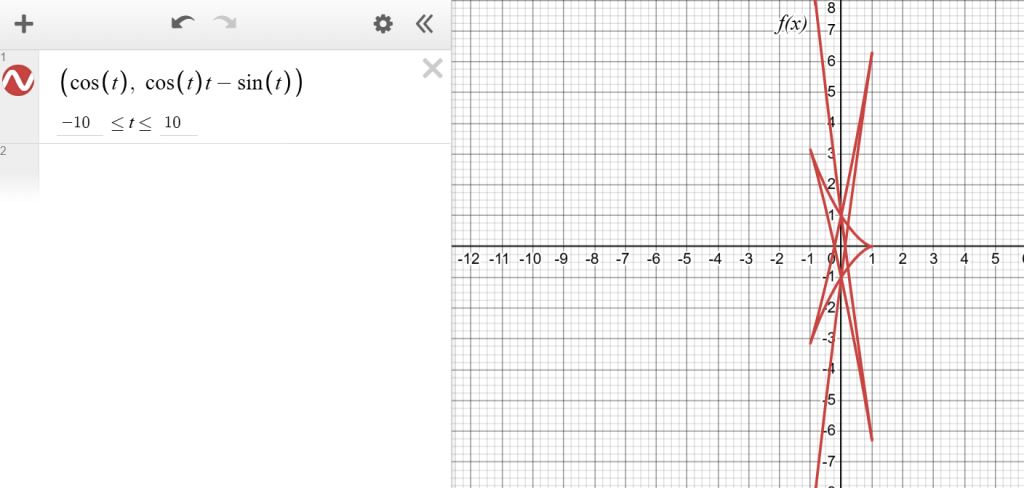
Example 2:

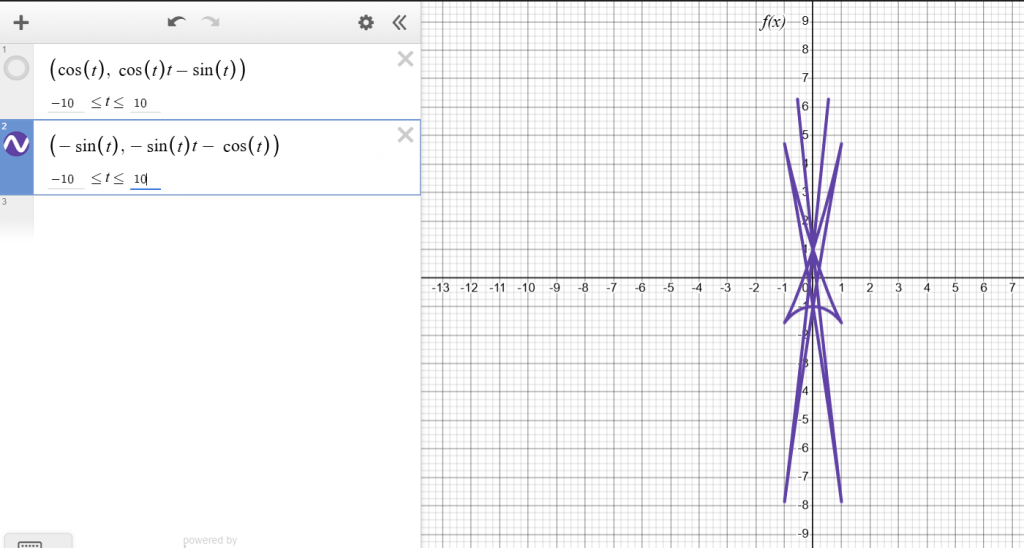
Example 3:

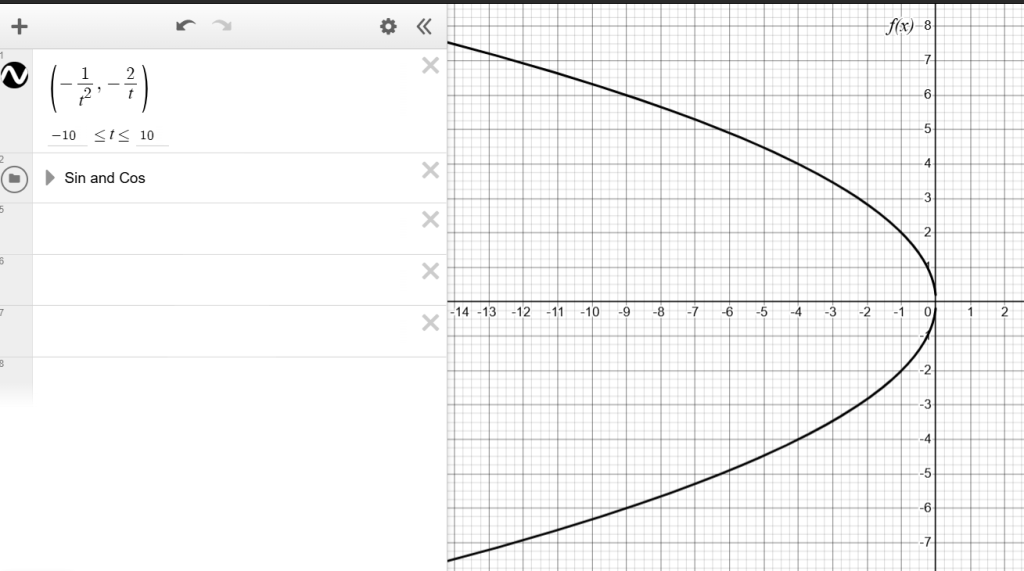
Aside: I thought this is really cool. Notice what the singularity at t = 0 becomes…
Example 4:

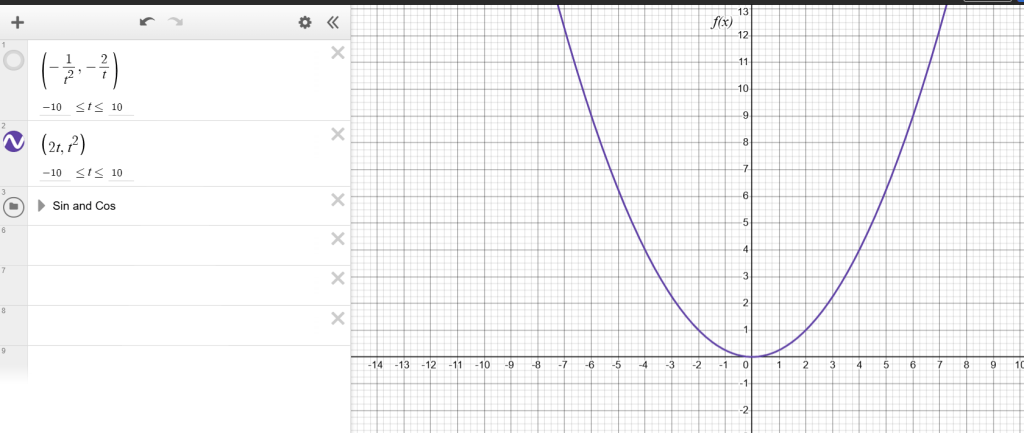
Aside: this really is a Legendre transformation


Leave a Reply